lunes, 12 de enero de 2026

VISUAL ELEMENTS: DEPTH AND SPACE


UNIT 3: VISUAL ELEMENTS "WAYS TO CREATE DEPTH AND SPACE"

How to Create THE ILLUSION OF DEPTH AND SPACE

(From  www.virtualinstructor.com and www.circlelineartschool.com)

One of the ELEMENTS IN ART IS DEPTH AND SPACE.  

It is important to be able to create the illusion of space on a 2D surface. In reality, all realistic or representational art depends on the creation of an illusion.  If creating realistic art is what you're after, then having the ability to create the illusion of space on a 2D surface is a skill that you will find useful. There are a few tricks that you can use to create the illusion of space.  There are ways to create the illusion of space on a 2D surface. 

Use them together to maximize the illusion.


Video Tutorial: The illusion of space (con imágenes) | Lecciones ...


How to Create Depth

1. Overlapping - When one object is positioned in front of another object, part of the object behind it may be blocked from view.  This is called overlapping. 

2. Shading - Creating volume using gradients from darker to lighter. 

3. Placement on the Surface - Generally, objects that are positioned lower on the picture plane will appear closer than objects that are positioned higher on the picture plane.

4. Size - Objects that are closer to a viewer appear larger than objects that are further off in the distance.

5. Value and Focus - Objects that are closer to a viewer appear darker in value and warmer in color.  Objects that are further away appear lighter in value and cooler in color. Objects that are closer appear more detailed than objects that are further away.

6. Linear Perspective - By using either 1 point perspective2 point perspective, or 3 point perspective, an artist can create the illusion of space.  Linear perspective is a drawing method that uses lines to draw objects in space.


Let's watch it here: 


How to draw a landscape using ATMOSPHERIC PERPECTIVE: 


jueves, 1 de enero de 2026

3D STREET ART: A QUESTION OF PERSPECTIVE

3D ART: A QUESTION OF PERSPECTIVE

The wife of 15th-century Italian artist Paolo Uccello used to beg him to come to bed. She was fed up of him staying up all night drawing objects with the new method of 3D illusion – or as it was called at the time, "perspective". He still wouldn't come to bed. "This perspective is such a sweet thing," he said.


As you already know we live in a three-dimensional world:  


1. Height  2. Length  3. Depth
We can change or viewpoint, trasnforming the way we see things. That way objects seem to be smaller of bigger depending whether we are close or far away from them. The same way objects might seem to vanish or disappear when we move around them or we move away from them. Light also plays a very interesting role in the way we perceive objects. 


3D OPTICAL ILLUSION


Now let's watch a few tutorials 

How to draw ONE POINT LINEAR PERPECTIVE: 


How to draw TWO POINT PERPECTIVE: 


How to draw AN OPTICAL ILLUSION AND 3D EFFECT: 


Resultado de imagen de one point perspective 


These are a few videos and links to help you with your project: 


miércoles, 26 de noviembre de 2025

CARDBOARD RELIEF PORTRAIT PROJECT

 CARDBOARD RELIEF PORTRAIT PROJECT 


Relief Cardboard Portraits!

Create a portrait--realistic or abstract using whatever type of cardboard you have on hand!

Materials needed:
  • Cardboard, cereal boxes, frozen pizza boxes, etc...
  • Scissors and X-acto/utility knife (if available). 
  • Glue (use what you have:  white glue, glue stick, hot glue...)
  • Note:  make sure to use X-acto knife carefully and safely!  Make sure to cut on scrap cardboard !
  • Edges of cardboard can be torn as well as cut.

Steps:


  • Gather materials
  • Determine background (edges can be cut or torn.  shape can be regular or organic)
  • Develop portrait by layering cardboard and cutting into the cardboard, pulling off the top layer, and revealing the corrugation.
  • Use different types of cardboard for different "values"
  • Think about texture!
  • Use thin cereal box-type cardboard if you are struggling to cut thicker cardboard.
  • Optional:  Further embellish with paint, markers, pencil, pen etc... if you'd like!

EXPRESSIONIST PORTRAITS


EXPRESSIONISM


HOW TO PAINT PORTRAIT IN THE STYLE OF EXPRESSIONISM

lunes, 27 de octubre de 2025

PROJECT: YOUR LIFE COUNTS, TELL YOUR STORY

 VISUAL SELF BIOGRAPHY

PROJECT: YOUR LIFE COUNTS, TELL YOUR STORY

BASED ON THE WORK BY JAMES GULLIVER "PORTRAIT OF 50 FAMOUS FOLKS AND ALL THEIR WEIRD STUFF"


1. Illustrate the story of your life (visual autobiography) with photos and drawings.

2. Create a cover page with the title of your work and your details.

3. Make a table of contents (even though it appears before the chapters, it is the last thing you do).

4. Who would you dedicate your book to? Write your personalised dedication.

5. The work must have 5 chapters.

6. The chapter titles are:

Chapter 1: Who am I?

Chapter 2: My people

Chapter 3: The past

Chapter 4: Deep inside me

Chapter 5: The future

7. To develop the content of each chapter, you can choose from the following guidelines and add any others you can think of.

Chapter 1: Who am I?

  • Important successes in my life.

  • My qualities. Ten qualities that I do well.

  • My flaws. What bothers me about myself.

  • Important mistakes in my life.

  • What I am like, what I do, who I love.

  • My leisure and free time, how I spend it.

  • Give yourself a title, if you were a novel, a film, a meal, a piece of furniture...

  • Describe the place where you take refuge and how you feel there.

Chapter 2: My people.

  • People who influence my life and why.

  • People or characters I admire most and why.

  • My family. Description, photo... I say something about each one.

  • What is it like to live with me?

  • My friends. What they mean to me in my life.

  • People whose company I find positive.

Chapter 3: The past.

  • What did people say about me when I was little?

  • I have made mistakes. How have I corrected them?

  • My contribution to this world.

  • People who taught me to grow up.

  • Experiences that have made me happy.

  • I write down the feelings that my childhood memories awaken (games, parties...)

Chapter 4: Deep inside me.

  • The fears in my life.

  • My loneliness. How do I feel when I am alone?

  • What gives meaning to my life. I believe in...

  • I talk to my body and write it a letter.

  • What does studying mean to me? How do I feel?

  • What I would like people to say about me.

  • What do I understand by happiness? What gives me happiness?

  • I talk to my doubts, my struggles...

  • Who do I help? Who do I ask for help?

Chapter 5: The future

  • I imagine my life in 20 years.

  • How do I see myself? Where will I be? What will I be? What will I do?

  • What will remain of the present?

  • What goals will I have achieved? Which ones will I still have to

  • achieve?

  • What dreams will I have fulfilled?

  • How will I experience interpersonal relationships?

9. At the end of the book, include a page with the following title: ‘Dedications from the people who share my life at this moment.’ On this page, you can write a dedication and have anyone you want sign it.

10. Make a book and present it to your teacher.


viernes, 19 de septiembre de 2025

LINE: SELF-PORTRAIT

THE EXPRESSIVE QUALITIES OF LINE


SELF-PORTRAIT "LINE"

One of the most important expressive elements of design: THE LINE. 

The line by Julianna kuntsler.


Visual Elements: LINE from Rosa Fernández


ACTIVITY: SELF PORTRAIT

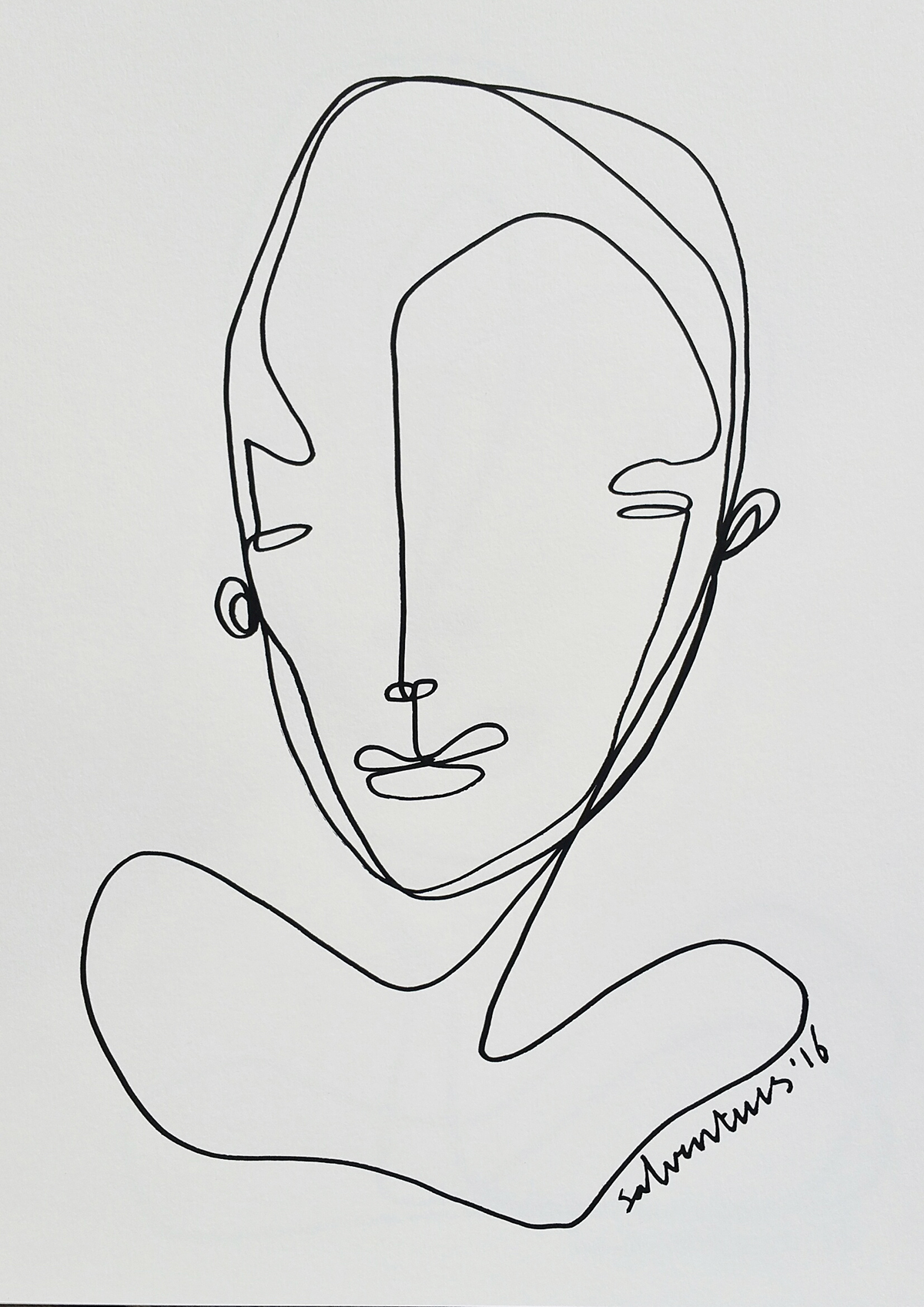
Now we are going to use the line as an element to define, draw, express, communicate or simple decorate our own portrait. 

Assessment Criteria (do not forget to copy this at the back of your work) 

1. Draw a margin or a frame or a background (1 point)
2. Use the line to create the impression of volume (implied volume) (3 points)
3. Originality, creativity (2 point) 
4. Expressiveness (1 points)
4. Neatness, good presentation (1 points)
5. Description of your work, minimum 5 sentences (1 point)
6. Self evaluation (1 point) 


VIDEO-TUTORIAL OF PORTRAIT DRAWING WITH LINES


SOME OTHER EXAMPLES OF PORTRAITS USING LINES

Resultado de imagen de portraits with lines

Resultado de imagen de portraits with lines


SOME OTHER INTERESTING EXAMPLES: 


Resultado de imagen de portrait with lineResultado de imagen de portrait with line
Resultado de imagen de retrato lineasResultado de imagen de portraits with lines